
Weekly Digest 6 – 12 July 2026 – Doom, Time capsules, & DIY Phones
3D Printing, Home Automation, News, News & Feeds, Other, Platforms, Projects, Raspberry Pi beginner, getting started, home lab, projects, raspberry pi, sensors, Tech 1
Welcome to this week’s digest! We’ve got an incredible line-up of maker ingenuity, taking us from the 1980s 8-bit era to hyper-detailed modern visual displays, and wrapping up with an incredible homegrown computing platform.
Featured Projects
Doom Ported to the BBC Micro Vintage Computer
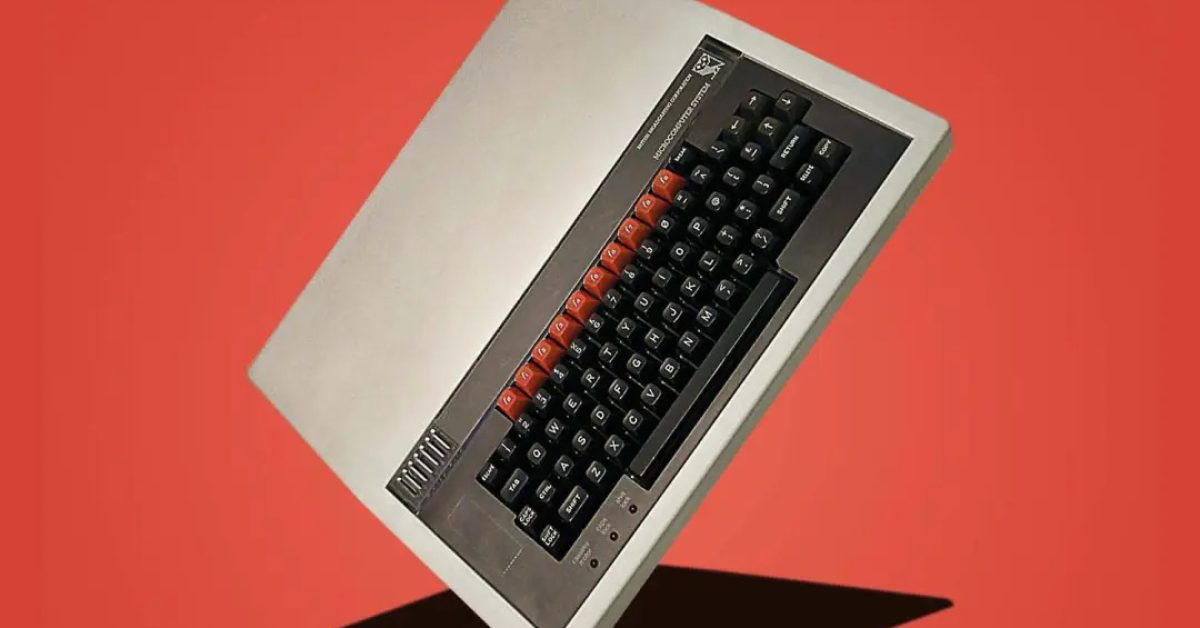
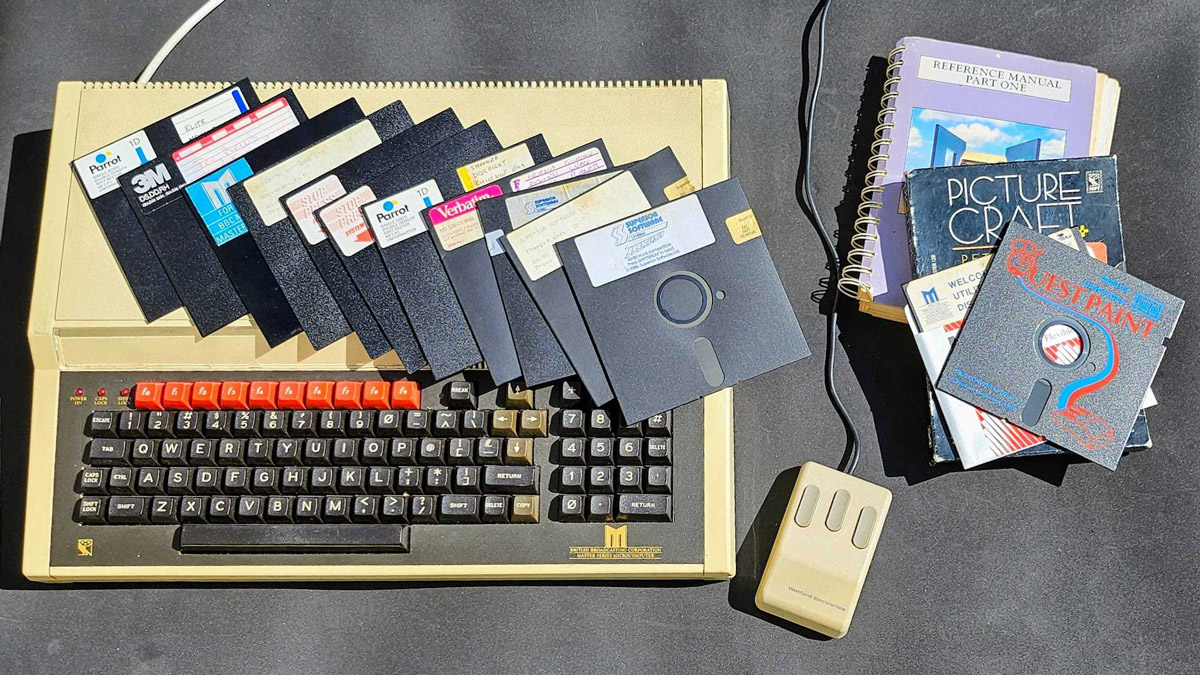
Can it run Doom? It’s the ultimate question for any piece of hardware, but this week, the bar was raised to an unbelievable level. A project surfacing from Eben Upton’s GitHub account (yes, that Eben Upton, co-founder of Raspberry Pi) showcases a functional version of DOOM’s E1M1 wireframe renderer running on a completely stock, vintage BBC Micro Model B.
This is an absolute masterclass in bare-metal optimization. Doom’s original engine fundamentally relies on a 32-bit CPU architecture, utilizing 16.16 fixed-point math, massive 64KB lookup tables, and column drawing routines. The BBC Micro, on the other hand, sports a modest 2MHz 8-bit 6502 processor with absolutely no native multiply instruction. It operates with a tiny 32K of main RAM, 5K of which is immediately eaten up by the frame buffer, leaving a tight 16K banked window for everything else.
By utilizing a clever mix of Python (assisted by Claude for code generation) and raw assembly, the renderer achieves full BSP tree traversal, analytical hidden-surface removal, and perspective projection. The map is entirely walkable, complete with working doors and lifts, chugging along at roughly 7 frames per second. It’s a staggering achievement for retro-computing purists.
A Light-Up 3D Map of Monaco
A breathtaking geographic project took the concept of a multi-layered PCB to an artistic extreme. The creator built an incredibly detailed, light-up topological map of Monaco using vertically stacked translucent columns lit by an underlying LED matrix. It tracks elevations beautifully, turning a dense city layout into a glowing physical dashboard.
Our Binge-Watch of the Week: Marcin Plaza’s Smartphone Re-engineering
If you’ve been hanging around the workshop lately, you’ve probably heard us raving about YouTuber Marcin Plaza. His video, “I built my own phone… because innovation is sad rn” has been playing on a loop in the PiShop offices, and it is the ultimate love letter to hardware hacking.
Fed up with the sea of boring, fragile glass rectangles dominating the smartphone market, Marcin took a broken Samsung Galaxy Z Flip 5 (complete with a dead folding internal screen) and completely reincarnated it as a rugged, tactile Android slider reminiscent of the classic BlackBerry Torch.
The build is incredibly clever:
The Brains: He stripped the phone down to its bare essentials, even tossing out the 5G antenna, to reuse the motherboard and the functional outer cover screen as the main display.
The Interface: To make a screen usually reserved for basic notifications run full Android apps, he utilized Samsung’s Good Lock app and its MultiStar module.
Tactile Typing: He integrated a physical BlackBerry Q10 keyboard, wired into a custom flex PCB and controlled by an Arduino Pro Micro emulating a USB input device.
The Chassis: To tie it all together, he designed a chunky custom aluminum case with a magnetic four-bar linkage that snaps open with a satisfying physical “clack.” He even added a MagSafe coil on the back to make up for losing the physical USB-C charging port to the keyboard!
It’s chaotic, brilliant, and exactly the kind of “Frankenstein engineering” that gets us excited to pick up a soldering iron.
If you’ve been hanging around the workshop lately, you’ve probably heard us raving about YouTuber Marcin Plaza. His video, “I built my own phone… because innovation is sad rn” has been playing on a loop in the PiShop offices, and it is the ultimate love letter to hardware hacking.
Fed up with the sea of boring, fragile glass rectangles dominating the smartphone market, Marcin took a broken Samsung Galaxy Z Flip 5 (complete with a dead folding internal screen) and completely reincarnated it as a rugged, tactile Android slider reminiscent of the classic BlackBerry Torch.
The build is incredibly clever:
The Brains: He stripped the phone down to its bare essentials, even tossing out the 5G antenna, to reuse the motherboard and the functional outer cover screen as the main display.
The Interface: To make a screen usually reserved for basic notifications run full Android apps, he utilized Samsung’s Good Lock app and its MultiStar module.
Tactile Typing: He integrated a physical BlackBerry Q10 keyboard, wired into a custom flex PCB and controlled by an Arduino Pro Micro emulating a USB input device.
The Chassis: To tie it all together, he designed a chunky custom aluminum case with a magnetic four-bar linkage that snaps open with a satisfying physical “clack.” He even added a MagSafe coil on the back to make up for losing the physical USB-C charging port to the keyboard!
It’s chaotic, brilliant, and exactly the kind of “Frankenstein engineering” that gets us excited to pick up a soldering iron.
A Homelab in a 2000s Time Capsule
For anyone looking to build a homelab without standard, boring server rack hardware, maker Justin Garrison showed off a brilliant alternative. He retrofitted modern high-performance homelab networking gear (including four Raspberry Pis!) directly into a stack of iconic, bright blue and grey Linksys router cases from the early 2000s. He even went through the effort of re-wiring the front panel status LEDs so they flicker perfectly with modern network traffic.
News From Last Week in Electronics & 3d Printing
JapiBase: A Full Retro Platform on the Pico 2 – JanFromBelgium has officially launched JapiBase, a breathtakingly complete retro computer platform built entirely on a single Raspberry Pi Pico 2 (RP2350). The division of labor is incredibly elegant: Core 1 and PIO0 completely handle the underlying I/O heavy lifting. It outputs flawless VGA video at an exact 1024×768 resolution (using a 65 MHz pixel clock derived from a 260 MHz system clock), manages a PS/2 keyboard interface, reads micro-SD storage over SPI, runs a LittleFS flash file system, and pumps out PWM stereo audio with a 4-channel wavetable synthesizer. This leaves Core 0 and PIO1 completely unburdened and wide open for user programs.
Turbo-Pascal Nostalgia with Japi Base Editor (JBE) – Alongside the core JapiBase operating layer, Jan released the Japi Base Editor (JBE). It’s a beautiful, full-screen, keyboard-driven code editor that feels exactly like the classic Turbo Pascal or QuickBASIC IDEs from back in the day. Sporting a dark blue full-screen interface, an Alt-accessible top menu bar, and a real-time status line, it includes advanced features like stream/block (column) selection, multi-file split-screen views, Find/Replace, and macro recording. It even includes the “Japi Commander”, a classic dual-pane file tool for managing files between an SD card and built-in flash storage.
That’s a wrap for this week’s digest! Got an incredible project you’ve been working on using components from PiShop Africa? Tag us on social media or send it through, you could be our next featured build! What maker youtuber/blogs do you follow or watch? We’d love to hear about it and check their projects out so make share to comment them below!


2026-07-14 @ 16:36
That Doom port is absolutely fascinating – I’d love to see a full playthrough.