DIY VR Headset That Brings SteamVR to Your Workbench
News, News & Feeds raspberry pi, raspberry pi pico, sensors, Tech, VR 0
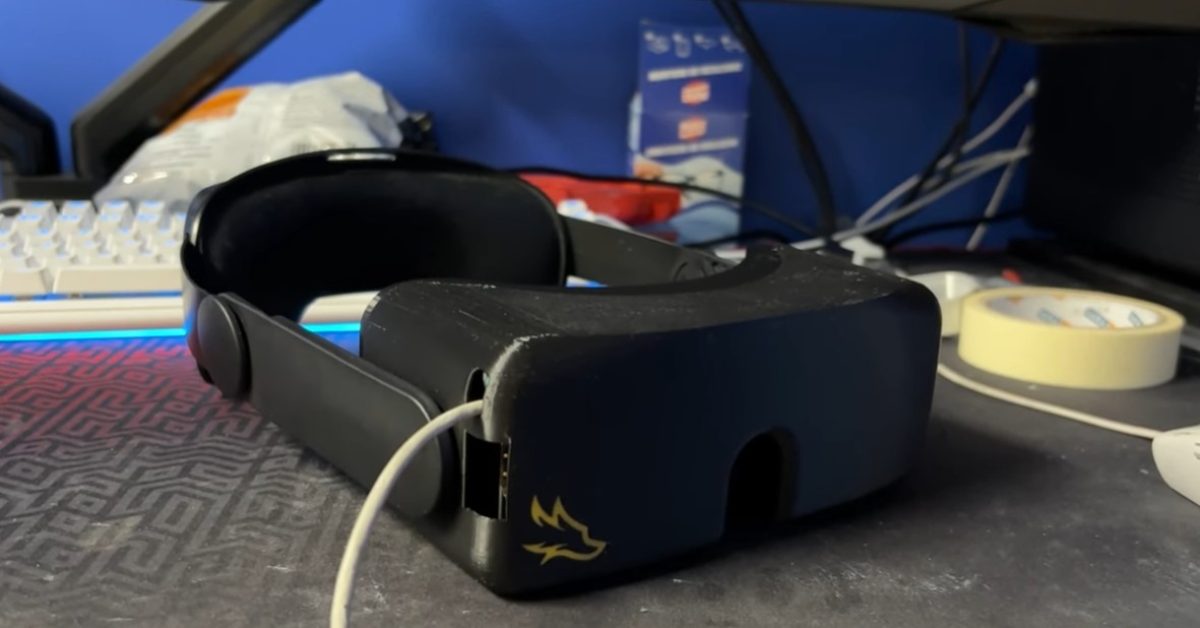
The recent Hackaday article about a DIY SteamVR-compatible headset called the Persephone 3 Lite grabbed my attention instantly as it’s something I’ve wanted to create myself for a long while, especially because it’s not just a prop or a hacked-together shell, but a real VR headset built from scratch with accessible parts and clever engineering.
What They Built (And Why It's Dizzyingly Smart)
The Persephone 3 Lite is a homemade virtual reality headset designed to work with SteamVR, meaning you can play VR content from your PC using gear you built yourself.
At its heart:
A pair of 2.9-inch square displays running at 1440×1440 resolution at up to 90 Hz—the kind of refresh rate and pixel count that actually feels smooth and sharp in VR.
Motion tracking handled by a Raspberry Pi Pico connected to an MPU6500 IMU (Inertial Measurement Unit), giving the headset awareness of how it’s moving in space—crucial for VR immersion.
Cheap Fresnel lenses (sourced off AliExpress) to focus the displays into your eyes, all assembled inside a custom 3D-printed housing that holds it all together.
What we love about this project is that its not just a bunch of junk strapped together with hopes and dreams, it’s that this setup interfaces with SteamVR, the same software ecosystem used by commercial VR headsets, meaning you can play real VR games and experiences without buying a R8000+ device.
This project perfectly encapsulates DIY culture at its best, taking something that’s usually expensive, and rebuilding it from commodity components and open designs.
VR headsets are often black boxes with proprietary parts and software, but here we see a maker opening that box, replacing parts with off-the-shelf displays, cheap optics, and a tiny Pico board doing the critical tracking tasks. It’s a reminder that with creativity and know-how, hobbyists can push technology well beyond its intended use case—a full VR experience from 3D-printed mounts and microcontrollers is just plain cool.
Ultimately, the Persephone 3 Lite isn’t just a fun one-off—it’s a proof-of-concept that DIY PCVR is within reach of makers with a 3D printer and a bit of patience. If you’ve got dreams of hacking your way into VR without spending big, this project shows one very promising path.